Example Title
Rath Yatra – Where Divinity Meets Humanity
Experience the world's largest religious procession in the holy city of Puri, Odisha.
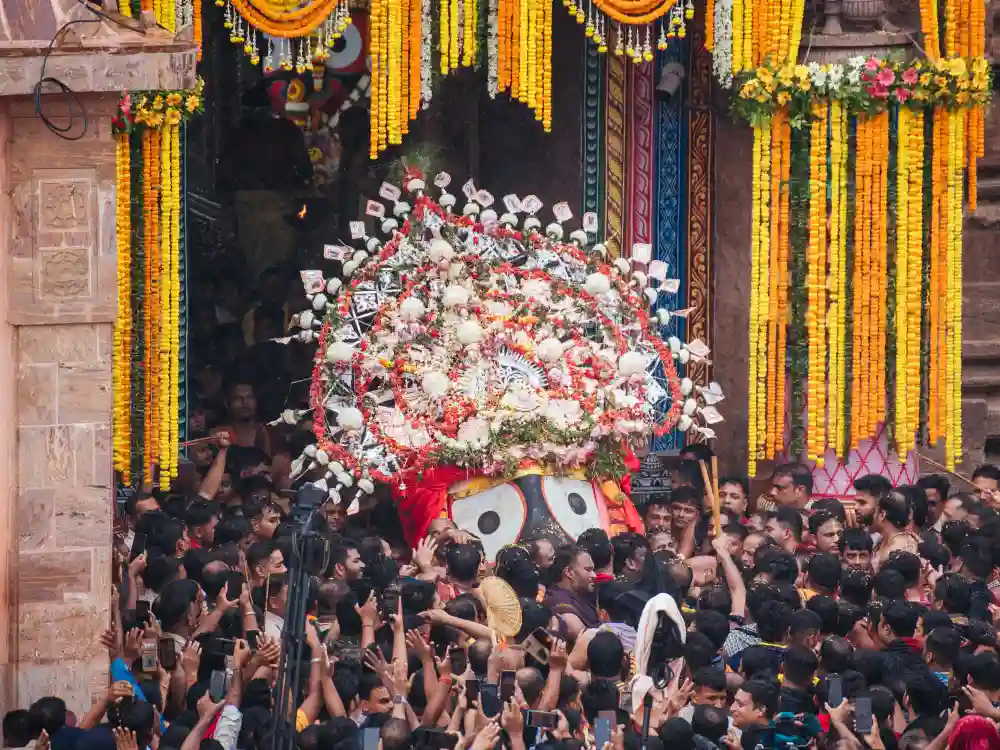
Rath Yatra is not merely a festival; it is one of the most powerful expressions of living faith in India. Celebrated during the sacred month of Ashadha (June–July), this iconic Lord Jagannath Festival of Puri witnesses Lord Jagannath, Lord Balabhadra, and Goddess Subhadra stepping out of the sanctum of the Jagannath Temple to bless devotees on the historic Bada Danda of Puri.
Rooted deeply in Odisha's spiritual philosophy, Rath Yatra symbolizes equality, accessibility, and collective devotion. Here, divinity does not remain confined within temple walls—it moves through the streets, allowing people of every caste, creed, and community to participate in the sacred journey. This timeless tradition stands as a cornerstone of Odisha Tourism and Jagannath culture.
Cultural Significance
Each year, millions of devotees gather to witness and participate in this grand procession, making it one of the most significant religious events in the world.

The Great Chariots
Icons of faith and craftsmanship that define the Puri Chariot Rituals. Each year, these colossal wooden chariots are constructed anew using traditional tools, age-old measurements, and hereditary craftsmanship—without the use of a single metal nail.
Nandighosa
The grand chariot of Lord Jagannath, draped in majestic red and yellow fabrics.
Taladhwaja
The mighty chariot of Lord Balabhadra, adorned in vibrant red and green.
Darpadala
The elegant chariot of Goddess Subhadra, covered in beautiful red and black.
Snana Purnima (The Ritual Bath)
The Holy Trinity is ceremonially brought to the Snana Mandap, where they are bathed with 108 pots of sacred water. This is the only public appearance of the deities before the Rath Yatra procession begins.
- Ceremonial bath with 108 pots
- Only public darshan before procession
- Beginning of sacred rituals
Anasara (The Seclusion)
Following the ritual bath, the deities are believed to fall ill and enter a period of seclusion known as Anasara. During this time, devotees worship through Anasara Pati, specially painted Pattachitra representations, keeping the connection with the divine alive.
- Period of divine seclusion
- Worship through Pattachitra art
- Spiritual preparation for journey
Netrotsava (Naba Jaubana Darshan)
The reappearance of the deities marks spiritual rejuvenation. Freshly painted eyes symbolize renewed vitality and divine youthfulness, preparing the Lords for their public journey.
- Freshly painted divine eyes
- Symbol of renewed vitality
- Preparation for public journey
Sri Gundicha Yatra (The Procession)
This is the principal day of Rath Yatra. Amid rhythmic chants and beating drums, the deities are brought out of the Jagannath Temple in the distinctive Pahandi Bije, a slow, swaying procession unique to Puri.
The Gajapati Maharaja of Puri performs the revered Chhera Pahanra, sweeping the chariot platforms with a golden broom—a powerful reminder that even kings serve before Lord Jagannath.
Devotees then take part in Ratha Tana, pulling the massive chariots along the Grand Road towards the Gundicha Temple, believed to be the deities' maternal home.
- Pahandi Bije procession
- Chhera Pahanra by Puri King
- Ratha Tana (chariot pulling)
Stay at Gundicha Temple
For several days, the deities reside at the Gundicha Temple, offering devotees a closer and more intimate darshan, distinct from the sanctum rituals of the main temple.
- Intimate darshan opportunity
- Residence at maternal home
- Special prayers and rituals
Bahuda Yatra (The Return)
The return journey retraces the same ceremonial path back to the Jagannath Temple. En route, the chariots halt at the Mausi Maa Temple, where the deities are offered the traditional Poda Pitha, linking the ritual with Odia festive cuisine.
- Return procession
- Halt at Mausi Maa Temple
- Offering of Poda Pitha
Suna Besha (The Golden Attire)
One of the most visually grand moments of Rath Yatra, Suna Besha Puri sees the deities adorned with massive gold ornaments while seated on their chariots, drawing devotees from across the world.
- Deities adorned in gold
- Most spectacular visual moment
- Global attraction for devotees
Niladri Bije (The Final Entry)
The festival concludes as the deities return to the sanctum. The ritual ends with the famed Rasagola tradition, symbolizing reconciliation between Lord Jagannath and Goddess Lakshmi—an episode deeply rooted in Odia cultural memory.
- Return to temple sanctum
- Rasagola offering tradition
- Symbolic reconciliation ritual
Essentials Cheat Sheet
A Living Expression of Faith
Rath Yatra is not merely a festival; it is one of the most powerful expressions of living faith in India. Rooted deeply in Odisha's spiritual philosophy, it symbolizes equality, accessibility, and collective devotion.
Here, divinity does not remain confined within temple walls—it moves through the streets, allowing people of every caste, creed, and community to participate in the sacred journey. This timeless tradition stands as a cornerstone of Odisha Tourism and Jagannath culture
Glimpses of Rath Yatra