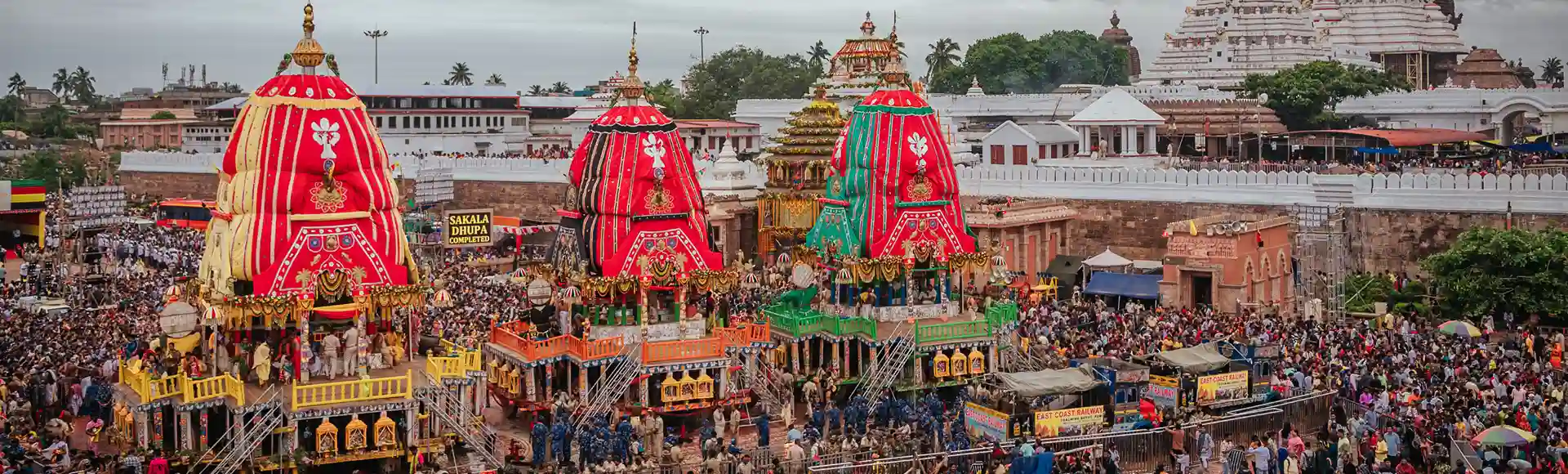
The Divine Journey of Ratha Jatra
In a world that rarely slows down, Ratha Jatra in Puri offers a rare moment of pause, joy, and shared celebration. Once every year, Lord Jagannath, along with his brother Balabhadra and sister Subhadra, leaves the sanctum of the Shree Mandir and comes out onto the streets of Puri to meet his devotees. From the Ratnasinghasan, the Lord is carried by his Sevayats in the ceremonial procession known as Pahandi, swaying gracefully to the rhythm of brass gongs, cymbals, conches, and devotional chants as waves of faith fill the air.
This is not a festival you merely witness, you become part of it. People pull the chariots together, walk alongside the deities, and chant with strangers who feel like family for the day. The towering wooden chariots move slowly through Bada Danda, the Grand Road of Puri, transforming the city into a river of devotion.
The story begins after Deba Snana Purnima, when the deities are believed to fall ill following their ceremonial bath. They rest in seclusion for a few days, cared for like members of a family. Once they recover, they set out for their annual journey to the Gundicha Temple, believed to be their aunt’s home. The journey feels deeply familiar and human, a homecoming filled with affection, celebration, and togetherness.
Along the way, the chariots make a symbolic halt near the samadhi of Salabega, the revered Odia poet-devotee of Lord Jagannath. Born to a Muslim father and a Hindu mother, Salabega’s timeless bhajans remain deeply woven into Jagannath culture. Tradition holds that the Lord pauses here to honour the devotion of his beloved devotee, making the moment one of the most moving expressions of inclusivity and compassion within the festival.
Ratha Jatra resonates with anyone who values family, community, and traditions that continue to feel alive across generations.
The story begins after Deba Snana Purnima, when the deities are believed to fall ill following their ceremonial bath. They rest in seclusion for a few days, cared for like members of a family. Once they recover, they set out for their annual journey to the Gundicha Temple, believed to be their aunt’s home. The journey feels deeply familiar and human, a homecoming filled with affection, celebration, and togetherness.
Along the way, the chariots make a symbolic halt near the samadhi of Salabega, the revered Odia poet-devotee of Lord Jagannath. Born to a Muslim father and a Hindu mother, Salabega’s timeless bhajans remain deeply woven into Jagannath culture. Tradition holds that the Lord pauses here to honour the devotion of his beloved devotee, making the moment one of the most moving expressions of inclusivity and compassion within the festival.
Ratha Jatra resonates with anyone who values family, community, and traditions that continue to feel alive across generations.
Ratha Jatra 2026
-
Venue
Puri, Odisha -
Dates
Begins 16 July 2026
Rituals That Tell a Story
Before the journey begins, the deities are ceremonially carried out of the temple in a rhythmic, swaying procession accompanied by gongs, cymbals, conches, and chants called Pahandi. It is one of the most emotional moments of the festival.
In a profound gesture of humility, the Gajapati Maharaja of Puri regarded as the foremost servitor of Lord Jagannath sweeps the chariot platforms with a golden broom. The ritual symbolises equality before the divine.
The deities travel to the Gundicha Temple, where they stay for seven days before returning to the main temple. The return journey is known as Bahuda Jatra.
A day after Bahuda Jatra, the deities appear adorned in magnificent golden attire and ornaments weighing over 200 kilograms. This dazzling ritual is known as Suna Besha.
The concluding ritual carries a gentle, playful charm. As Lord Jagannath returns to the temple, Goddess Lakshmi expresses her displeasure at being left behind. The Lord offers her rasagola as reconciliation, bringing the festival to a sweet and symbolic close.
Ratha Jatra 2026 Festival Calendar
Dates are based on the traditional Odia Hindu calendar.
- Akshaya Tritiya 20 April 2026
- Chandan Jatra (Start Date) 19 April 2026
- Deba Snana Purnima 29 June 2026
- Ratha Jatra 16 July 2026
- Sandhya Darshana 23 July 2026
- Bahuda Jatra 24 July 2026
- Suna Besha 25 July 2026
- Adharapana 26 July 2026
- Niladri Bije 27 July 2026
Where the Divine Leads, Discovery Follows
While visiting Puri during Ratha Jatra, explore some of Odisha’s most iconic destinations nearby.
Konark Sun Temple
Chilika Lake (Satapada)
Bhubaneswar
What to Try
Whether you are dining at the Temple or at OTDC Panthanivas, or a local eatery, Odisha’s cuisine offers flavours rooted in temple traditions and local culture.
-
Mahaprasad
The sacred meal of the Jagannath Temple, comprising rice, dal, local vegetables, and desserts prepared without onion or garlic.
-
Dalma
A wholesome lentil preparation cooked with seasonal vegetables and lightly flavoured with ginger and panch phoran.
-
Kanika
Aromatic sweet rice prepared with ghee, raisins, and cardamom.
-
Khata
A tangy relish made from mango, tamarind, or elephant apple.
-
Kheera Mohan
Known to the world as Rasagola, this iconic Odia sweet has been offered to Lord Jagannath in Puri for centuries and remains deeply woven into the rituals and culinary traditions of the temple.
-
Chhena Poda
Odisha’s iconic caramelised cheesecake made from fresh chhena and jaggery.
Shop Souvenirs
-
Pipili
Famous for vibrant appliqué craft including canopies, wall hangings, umbrellas, and lampshades.
-
Raghurajpur Heritage Village
A heritage crafts village known for Pattachitra paintings, palm leaf engravings, and traditional artisan workshops.
-
Utkalika
Government-run emporium offering authentic Odisha handlooms, silver filigree, appliqué work, and handicrafts.
-
Boyanika
A Government run emporium known for curated collections of Sambalpuri textiles, tribal jewellery, and handwoven crafts.
-
Ekamra Haat
A vibrant urban crafts village showcasing Odisha’s handlooms, handicrafts, and regional cuisine.
When & How to Visit
Dates & Details
Ratha Jatra 2026: Begins on 16 July 2026 with the grand chariot procession and continues over the following days with Bahuda Jatra, Suna Besha, and Niladri Bije.
How to Reach
Nearest Airport: Biju Patnaik International Airport — well connected to major Indian cities.
Travel Tip
Travel Tip: Accommodation in Puri gets booked several months in advance during Ratha Jatra. Consider combining your journey with the Puri–Konark–Chilika coastal circuit for a richer Odisha experience.